Agricultural control equipment may operate far from stable grid power while facing heat, dust, moisture, long cable runs, solar charging, and seasonal use. A practical backup battery must be designed around the field system rather than treated as an isolated component.
Understand the field load and outage requirement
The first step is to separate continuous control loads from pumps, valves, radios, relays, displays, and startup pulses. Required backup time should be based on the operating sequence during an outage, not simply the normal daily energy use.
The controller's minimum input voltage and restart behavior also matter. A battery can retain energy but still fail to operate the system if voltage falls below the equipment threshold during a pulse.
Why LiFePO4 can suit outdoor control systems
LiFePO4 is often considered for industrial backup and solar applications because it can provide stable voltage, long cycle potential, and suitable thermal characteristics when correctly engineered. The final choice still depends on temperature, enclosure space, charge source, current, and service plan.
Capacity should include aging, cold or hot weather effects, conversion losses, and days of autonomy where solar input is uncertain.
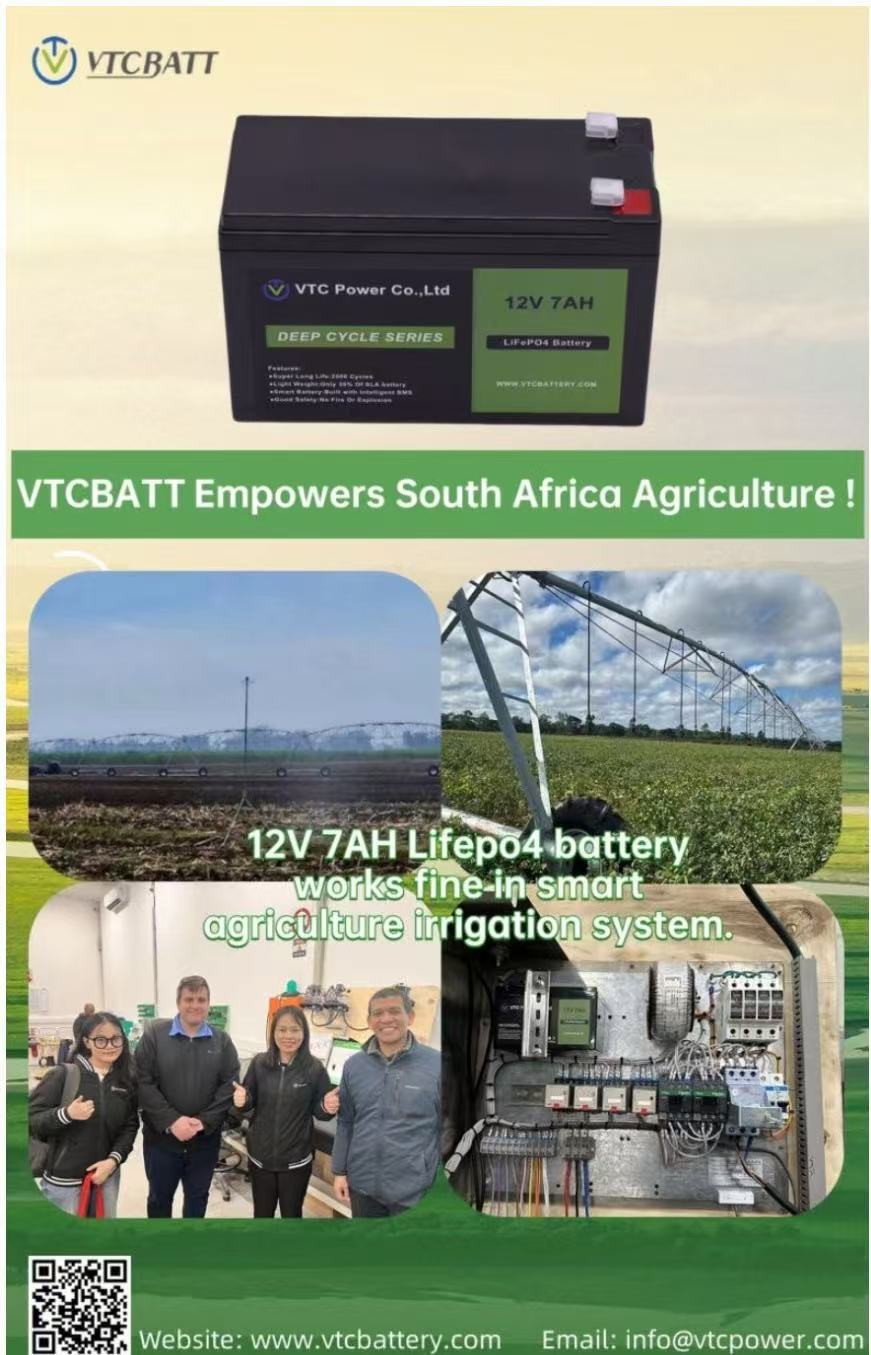
Coordinate solar charging and battery protection
Solar controllers, AC chargers, and DC power supplies must use voltage and current settings compatible with the battery configuration. The BMS should protect against overcharge, over-discharge, over-current, short circuit, and temperature conditions appropriate to the installation.
Charging temperature deserves special attention. A site that is hot during the day may also experience cold mornings, and the battery enclosure can differ significantly from ambient conditions.
Build for dust, moisture, heat, and service
The battery enclosure, cable glands, connector choice, mounting, drainage, ventilation, and corrosion resistance should match the site. Sealing alone is not a complete thermal strategy; trapped heat can shorten service life.
Service access should allow safe replacement and inspection without disturbing irrigation wiring or control electronics. Clear polarity, fuse access, labeling, and connector keying reduce field mistakes.
Validate before remote deployment
Bench tests should reproduce the controller load, valve or radio pulses, charger behavior, and planned cut-off settings. Environmental checks can include temperature exposure, enclosure installation, vibration during transport, cable voltage drop, and recovery after deep discharge protection.
Field monitoring during the first installation helps confirm energy use and charging margin across real weather and irrigation cycles.
| Field requirement | Battery design response | Verification |
|---|---|---|
| Long outages | Capacity with aging and weather margin | Runtime test using the actual controller |
| Solar charging | Compatible charge voltage and current | Full daily charge-discharge simulation |
| Dust and moisture | Suitable enclosure and cable entry design | Installation and ingress review |
| Remote service | Accessible fuse, connector, label, and replacement plan | Maintenance procedure check |
Measure the complete controller load and charging cycle. Outdoor backup power succeeds when electrical sizing, enclosure design, and maintenance planning are developed together.
Related battery resources
Continue from the technical overview to relevant VTCBATT product and engineering resources.
Frequently asked questions
How much backup capacity does an irrigation controller need?
It depends on continuous consumption, valve and radio pulses, required outage duration, conversion losses, temperature, and aging margin.
Can the battery be installed in a sealed box?
The enclosure must address ingress protection and thermal behavior together. A sealed box can still overheat if solar exposure and internal losses are ignored.
What data should be collected during a field trial?
Battery voltage, load current, peak events, charge energy, enclosure temperature, outage runtime, and recovery behavior are useful measurements.