Technical insight
Product and application details
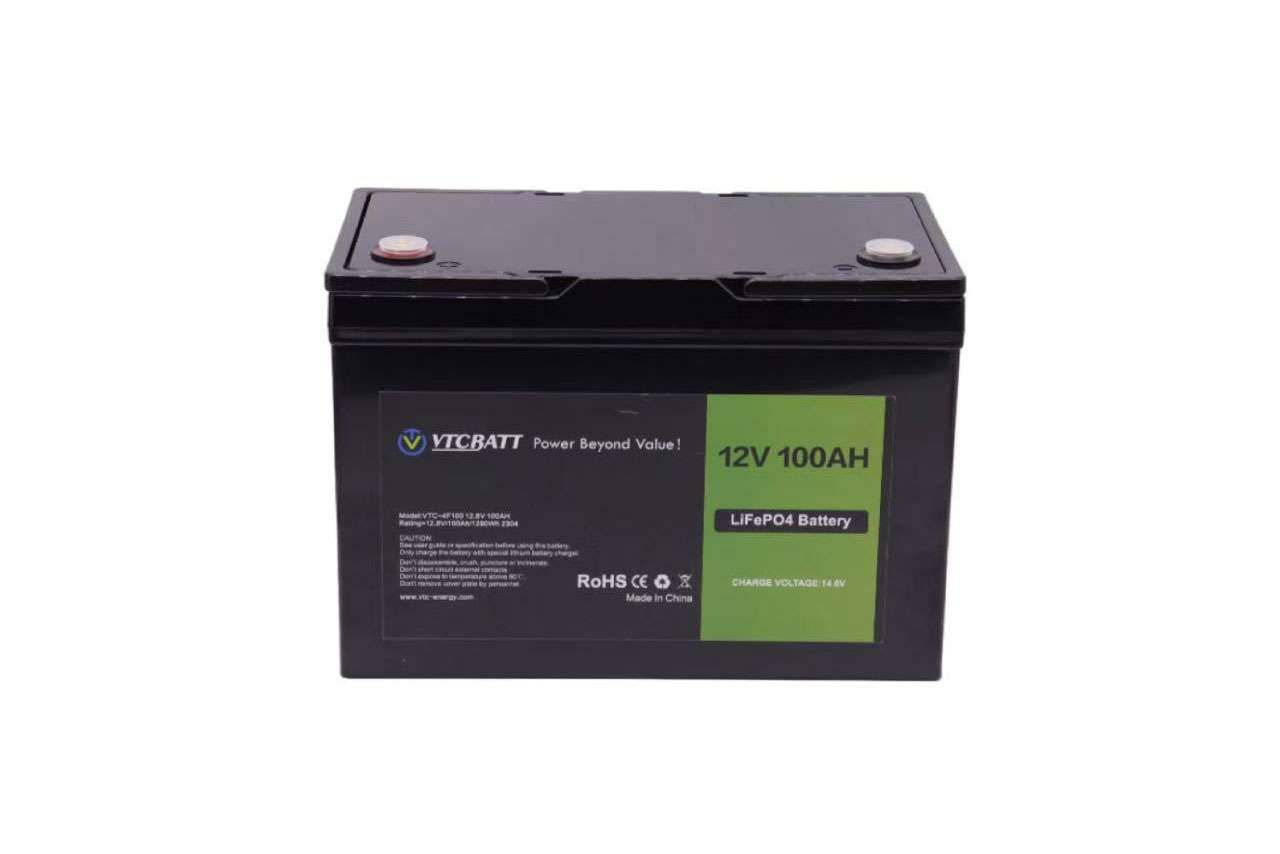
12V 7Ah LiFePO4 Battery Test Report with Lead-Acid Charger Compatibility Analysis This test focuses on a 12V 7Ah LiFePO4 battery and evaluates how a standard 12V lead-acid charger performs when used with this battery configuration. The main purpose is to assess charging compatibility, low-voltage recovery behavior, capacity retention, and the practical operating limits of the solution. In lead-acid-to-lithium replacement projects, one of the most common customer concerns is whether the original charger can still be used after switching to lithium. Based on the test results, this solution is practically feasible under specific conditions. However, that feasibility depends on a defined
12V 7Ah LiFePO4 Battery Test Report with Lead-Acid Charger Compatibility Analysis
This test focuses on a 12V 7Ah LiFePO4 battery and evaluates how a standard 12V lead-acid charger performs when used with this battery configuration. The main purpose is to assess charging compatibility, low-voltage recovery behavior, capacity retention, and the practical operating limits of the solution. In lead-acid-to-lithium replacement projects, one of the most common customer concerns is whether the original charger can still be used after switching to lithium.
Based on the test results, this solution is practically feasible under specific conditions. However, that feasibility depends on a defined charging voltage window, proper BMS protection logic, and a clear low-voltage charging boundary. It should not be interpreted as proof that every 12V lead-acid charger is suitable for every 12V 7Ah lithium battery.
1. Test Object and Conditions
| Battery Model | VTC-4F7 |
| Battery Specification | 12.8V 7Ah LiFePO4 battery |
| Cell Configuration | 4S2P |
| BMS | 4-series 10A protection board |
| Charger Type | 12V 30 type 60W constant-power lead-acid charger |
| No-Load Voltage | 13.7V-14.4V |
From a voltage-matching perspective, a 4S LiFePO4 battery typically reaches full charge at around 14.4V, then settles back to a resting platform above 13V. That means a 12V lead-acid charger may form a workable compatibility window with a 12V 7Ah LiFePO4 battery if its output voltage remains within a moderate range.

Figure 1: The test equipment shows an open-circuit voltage of approximately 13.729V, providing a direct reference for charger voltage compatibility.
Voltage Compatibility Conclusion
During testing, the charger did not show repeated start-stop behavior, and the BMS did not enter frequent protection mode. This indicates that the system can operate stably during basic charging under this specific combination.
- 4S fallback voltage reference: about 13.8V
- 4S charging voltage reference: about 14.4V
- 13.7V-14.4V output range generally matches the battery target voltage
- No obvious oscillation was observed at the start of charging
2. Charge Curve and Low-Voltage Condition Results
Further testing shows that charger behavior changes noticeably at different battery voltage levels. Two observations are especially important: the constant-voltage stage is relatively short, and the lower the battery voltage, the higher the initial charging current.
What the Waveform Suggests
The current curve indicates that the system can complete basic charging, but the constant-voltage phase is relatively short. In practical use, that means the battery may charge normally without necessarily reaching an ideal full-charge state every time.
- Short constant-voltage stage may lead to incomplete charging
- Charging current becomes higher at lower battery voltage
- Deep low-voltage recovery places more stress on the BMS and MOSFETs
- Greater caution is required at low temperature or with aged cells

Figure 2: Oscilloscope waveform illustrating how charging current changes through different stages.
If the total pack voltage drops below 8V, meaning single-cell voltage enters the 0-2.0V range, this charging method should no longer be used, as it may lead to battery heating or other failures.
3. Capacity Test Results
In the cycle test involving undervoltage discharge followed by recharge and discharge, the battery maintained a high effective capacity. Assuming an actual capacity of 8Ah, a 1C discharge result above 96% means the measured capacity should remain above 7.2Ah.
| Test Item | Result | Status |
| First cycle capacity | 8.3321Ah | Pass |
| Second cycle capacity | 8.290Ah | Pass |
| Minimum threshold at 1C discharge | 7.2Ah | Reference |
Both measured capacity values were clearly above the threshold. This suggests that under the tested conditions, the 12V 7Ah battery did not show immediate capacity loss or clear functional abnormality when charged with a standard lead-acid charger.
4. Conclusion and Application Recommendations
Taking voltage compatibility, low-voltage charging behavior, and capacity retention together, the conclusion is relatively clear: for this 12V 7Ah LiFePO4 battery, when paired with a 4-series 10A BMS and a 60W standard lead-acid charger operating within a 13.7V-14.4V output range, continued use of the original charger is practically feasible.
However, this is a conditional feasibility result, not a universal one. The following conditions should be emphasized:
- The charger voltage window must match the 4S LiFePO4 battery requirements
- The BMS protection function must operate correctly
- The battery should not remain in a deep low-voltage state for extended periods
- This charging method should not be used when total pack voltage is below 8V
- Charging saturation and long-term cycle-life performance should still be evaluated carefully
If the goal is low-cost replacement, quick market introduction, and compatibility with an existing lead-acid system, this 12V 7Ah solution has strong practical reference value. If the goal is higher consistency, more stable full-charge performance, and longer cycle life, a dedicated LiFePO4 charger is still the better long-term option, ideally backed by additional tests for temperature range, cycle life, and cross-brand charger compatibility.