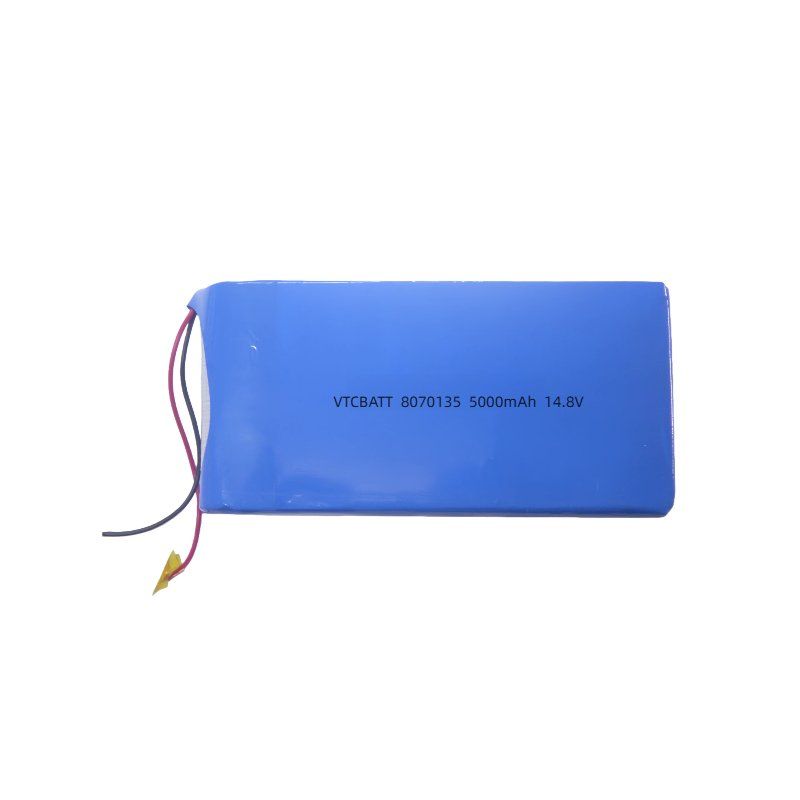
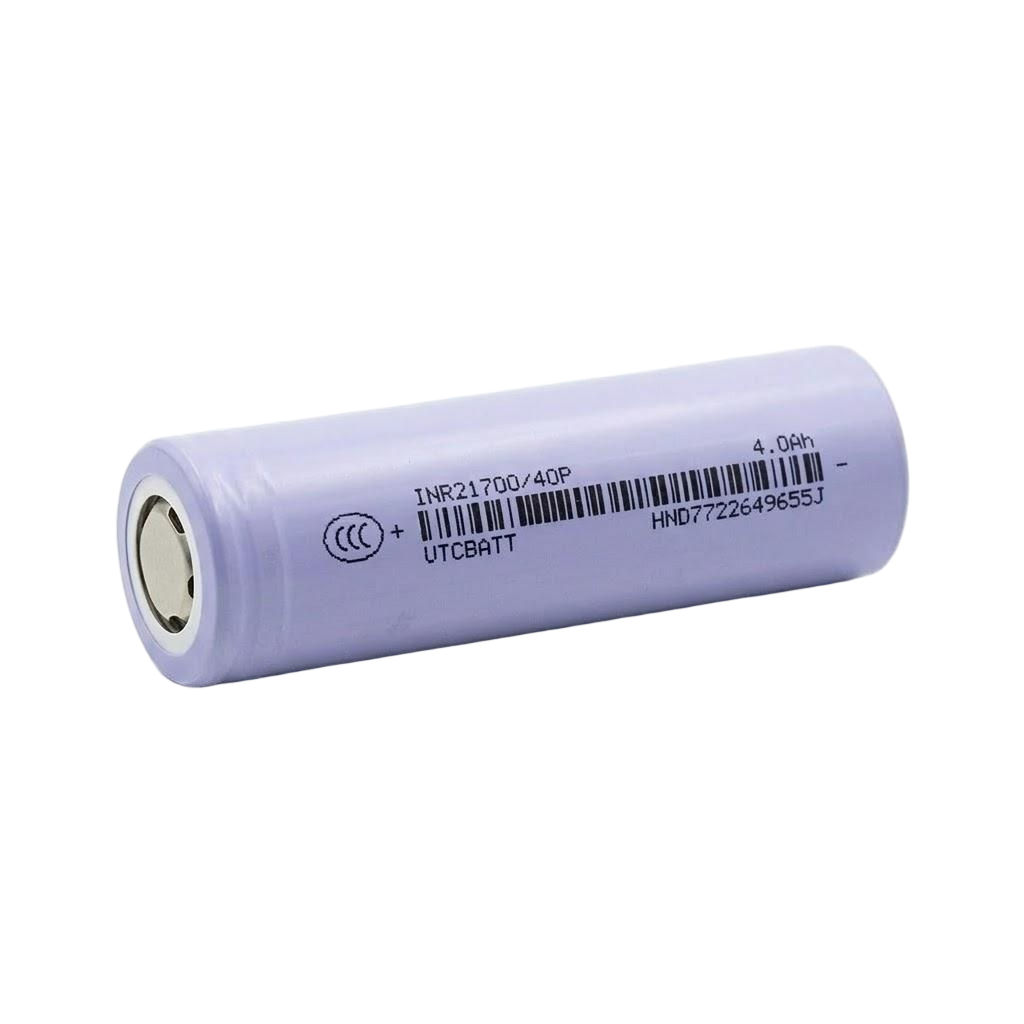
High discharge
Cell chemistry and electrode platform are selected for the required current, pulse duration, and cycle target.
Power delivery without avoidable voltage collapse
High-discharge battery systems designed as a complete current path: cells, tabs, welds, busbars, BMS, wiring, connector, thermal structure, and application load.
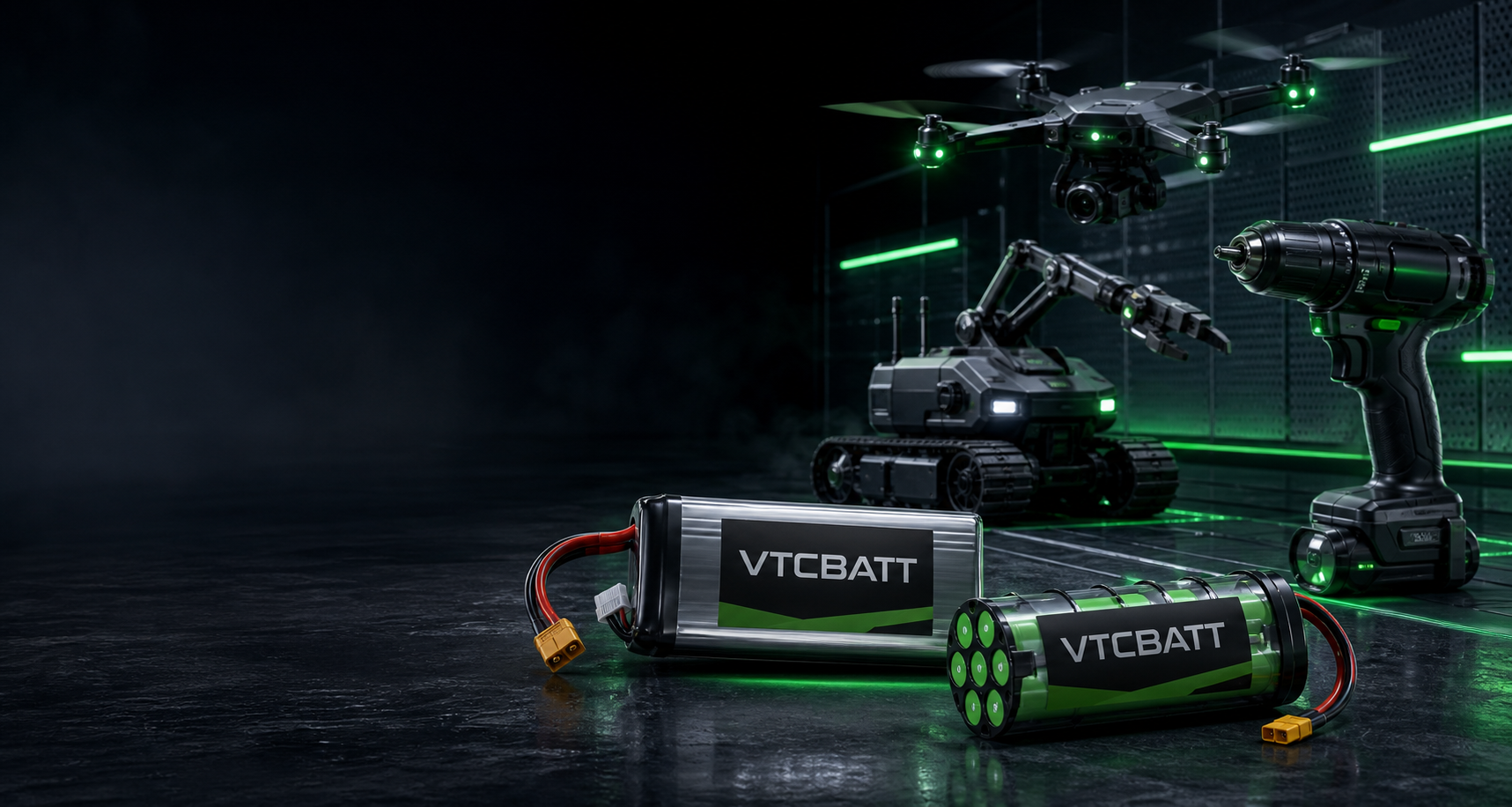
Solution overview
Actual output depends on internal resistance across the complete pack, temperature rise, voltage sag, connector capability, cooling, peak duration, and state of charge.
VTCBATT sizes the electrical and mechanical system around continuous current, transient current, duty cycle, recharge time, weight, and operating environment.
Performance priorities
The target is translated into measurable electrical, thermal, mechanical, safety, and production requirements.
Cell chemistry and electrode platform are selected for the required current, pulse duration, and cycle target.
Series resistance is controlled across cells, interconnects, protection devices, wiring, and connector.
Pack geometry, heat paths, spacing, sensors, and enclosure ventilation manage temperature rise.
Prototype packs can be evaluated under representative motor, tool, robotics, or pulse loads.
Integrated engineering
Cells are only one part of the solution. The complete current path, structure, electronics, test plan, and manufacturing controls are developed together.
Capture continuous current, peak current, pulse time, duty cycle, voltage floor, and operating temperature.
Rate cells, tabs, welds, busbars, BMS, fuse, cable, connector, and terminal interfaces.
Model and test heat generation, sensor placement, cooling, enclosure, and shutdown thresholds.
Test voltage sag, power, temperature, runtime, cycle, protection, recharge, and real equipment behavior.
Technical framework
| Typical chemistry | High-rate LiPo, Li-ion, or LiFePO4 |
|---|---|
| Configuration | Single-cell through high-voltage series/parallel custom packs |
| Current definition | Continuous, peak, pulse duration, duty cycle, and minimum voltage |
| Pack options | High-current BMS, fuse, contactor, balancing, telemetry, heavy-gauge cable, and custom connector |
| Validation focus | Voltage sag, temperature rise, power, efficiency, protection response, cycle, and application load |
Application fit
Battery architecture is matched to the device load, environment, enclosure, charging, and service-life target.
Battery architecture is matched to the device load, environment, enclosure, charging, and service-life target.
Battery architecture is matched to the device load, environment, enclosure, charging, and service-life target.
Battery architecture is matched to the device load, environment, enclosure, charging, and service-life target.
Related battery platforms
Final battery selection and specifications should be confirmed against the complete application requirement.
Factory and validation
VTCBATT supports cell matching, incoming inspection, pack assembly, electrical testing, temperature testing, vibration, impact, protection verification, application-load testing, and certification planning.
Engineering, assembly, inspection, and production support within one supply chain.
Custom electrical, mechanical, labeling, packaging, and documentation options.
Controlled sourcing, revision management, cell matching, and repeat-order standards.
Project planning for UN38.3, IEC 62133, UL, CE, RoHS, MSDS, and market requirements.
FAQ
Provide nominal voltage, target capacity or runtime, continuous and peak current, maximum dimensions, temperature range, charging method, annual quantity, and certification requirements.
Yes. Cell arrangement, dimensions, BMS or PCM, connector, wire length, NTC, communication, label, enclosure, mounting, and packaging can be developed around the product.
Yes. Prototype packs can be produced for installation, load, runtime, charging, thermal, protection, and device-level validation before the BOM is released.
VTCBATT uses controlled cell sourcing, matching criteria, documented BOMs, process inspection, electrical tests, and outgoing inspection to support stable production.
Depending on chemistry and target market, support may include UN38.3, IEC 62133, UL, CE, RoHS, MSDS, transport documents, and project-specific tests.
C-rate equals current divided by capacity, so a 50A load from a 5Ah pack is 10C. Battery selection must also account for continuous versus pulse duration, duty cycle, temperature, minimum voltage, cycle life, and the resistance of the complete pack.
Voltage sag is created by cell DC resistance, state of charge, temperature, tabs, welds, busbars, BMS devices, cables, connectors, and load transients. High-power battery engineering controls the entire current path rather than only the cell rating.
High-rate LiPo supports custom shapes, low weight, and high discharge platforms, while cylindrical Li-ion offers standardized formats, robust production, and predictable thermal paths. The choice depends on power, energy, space, cooling, cycle life, and production volume.
Validation can include continuous and pulse-load testing, voltage sag, temperature rise, connector and cable checks, BMS trip behavior, recharge time, cycle testing, and operation under the equipment's representative duty cycle.
Start a solution project
Share the device, voltage, runtime, current, dimensions, environment, quantity, and certification targets for an engineering review.