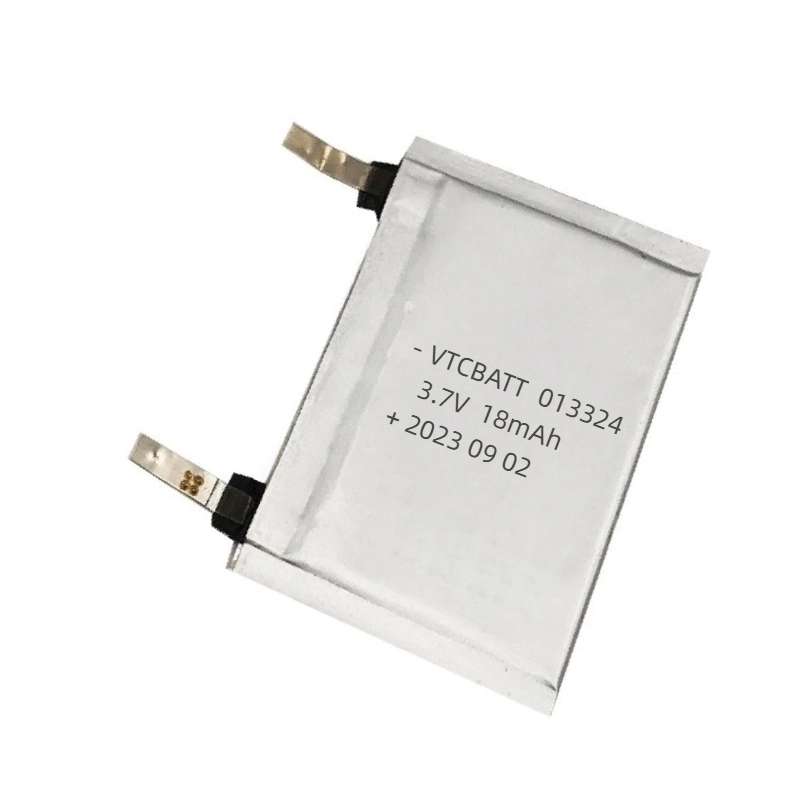
Space utilization
Cell geometry is developed around the available envelope, not a generic battery catalog size.
More design freedom in less space
Thin, miniature, curved, and custom-shaped battery development for products where every millimeter influences comfort, enclosure design, and usable runtime.
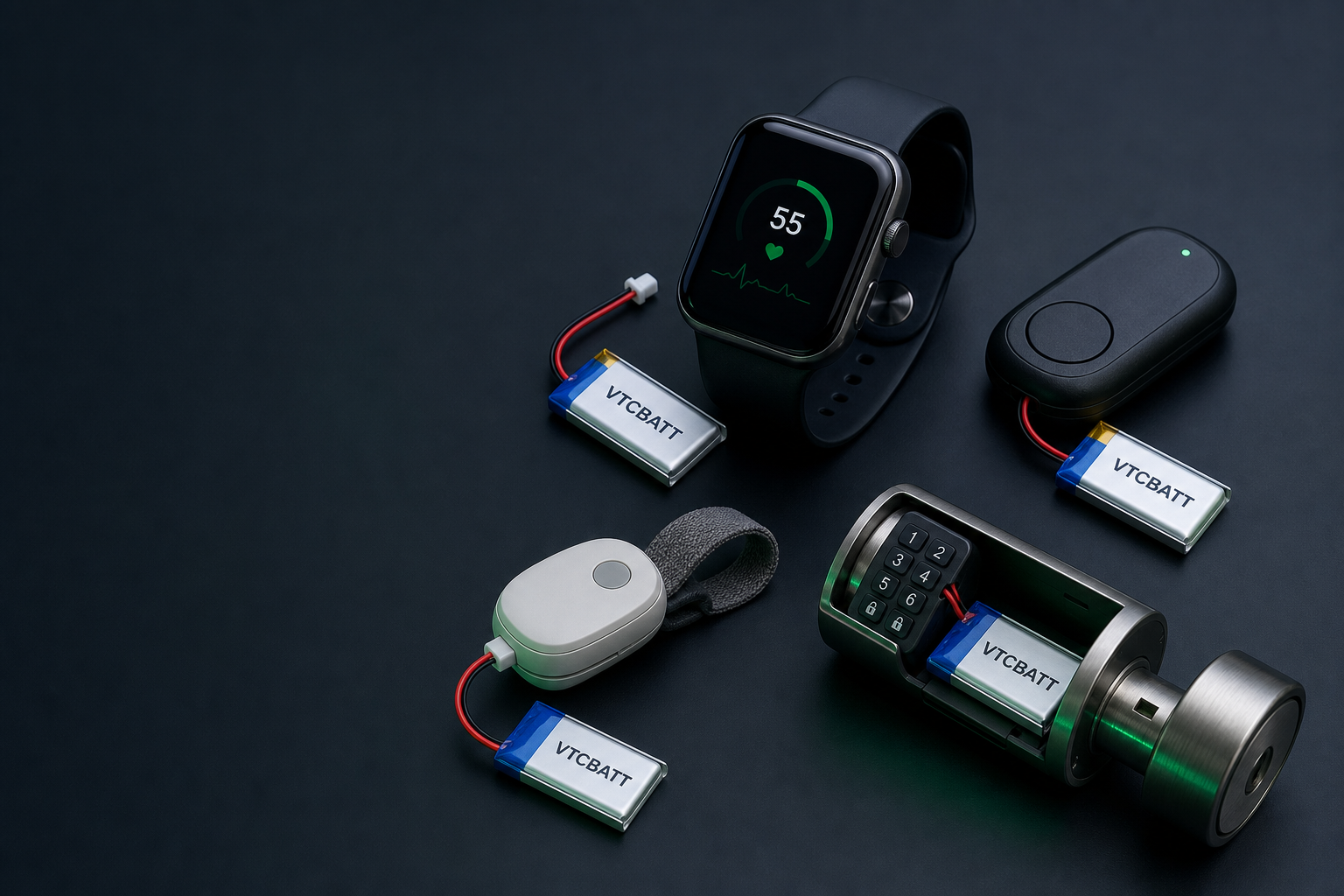
Solution overview
Wearable and medical products often have irregular internal space, strict weight limits, skin-contact constraints, and short charging windows.
Our engineering process coordinates cell dimensions, tab orientation, swelling allowance, protection electronics, and mechanical integration from the first prototype.
Performance priorities
The target is translated into measurable electrical, thermal, mechanical, safety, and production requirements.
Cell geometry is developed around the available envelope, not a generic battery catalog size.
Battery thickness, mass distribution, edges, and mounting are considered for wearable products.
Protection boards, NTC, tabs, connectors, and flex routing are packaged within tight constraints.
Dimensional inspection, appearance standards, impedance matching, and fixture design support repeat builds.
Integrated engineering
Cells are only one part of the solution. The complete current path, structure, electronics, test plan, and manufacturing controls are developed together.
Review 3D space, compression zones, bending limits, mounting, and service access.
Select or develop thickness, width, length, capacity, tab direction, and shape.
Package PCM, wiring, connector, sensor, insulation, label, and pull tab.
Verify installation, charging, runtime, thermal behavior, swelling clearance, and assembly process.
Technical framework
| Typical chemistry | Lithium polymer pouch cell |
|---|---|
| Format | Ultra-thin, narrow, miniature, curved, or custom-shaped |
| Nominal voltage | 3.7V typical; series packs available when space permits |
| Integration | PCM, NTC, fuel gauge, tabs, wires, connector, label, foam, and fixture |
| Validation focus | Dimensions, capacity, swelling allowance, drop, bend constraints, charging, and device runtime |
Application fit
Battery architecture is matched to the device load, environment, enclosure, charging, and service-life target.
Battery architecture is matched to the device load, environment, enclosure, charging, and service-life target.
Battery architecture is matched to the device load, environment, enclosure, charging, and service-life target.
Battery architecture is matched to the device load, environment, enclosure, charging, and service-life target.
Related battery platforms
Final battery selection and specifications should be confirmed against the complete application requirement.
Factory and validation
VTCBATT supports cell matching, incoming inspection, pack assembly, electrical testing, temperature testing, vibration, impact, protection verification, application-load testing, and certification planning.
Engineering, assembly, inspection, and production support within one supply chain.
Custom electrical, mechanical, labeling, packaging, and documentation options.
Controlled sourcing, revision management, cell matching, and repeat-order standards.
Project planning for UN38.3, IEC 62133, UL, CE, RoHS, MSDS, and market requirements.
FAQ
Provide nominal voltage, target capacity or runtime, continuous and peak current, maximum dimensions, temperature range, charging method, annual quantity, and certification requirements.
Yes. Cell arrangement, dimensions, BMS or PCM, connector, wire length, NTC, communication, label, enclosure, mounting, and packaging can be developed around the product.
Yes. Prototype packs can be produced for installation, load, runtime, charging, thermal, protection, and device-level validation before the BOM is released.
VTCBATT uses controlled cell sourcing, matching criteria, documented BOMs, process inspection, electrical tests, and outgoing inspection to support stable production.
Depending on chemistry and target market, support may include UN38.3, IEC 62133, UL, CE, RoHS, MSDS, transport documents, and project-specific tests.
Ultra-thin lithium polymer development can reach approximately the 1 mm class for selected footprints and capacities. Final thickness must include manufacturing tolerance, swelling allowance, protection, insulation, and the mechanical pressure applied by the device.
VTCBATT can evaluate fixed curved and custom-shaped LiPo battery concepts using the required radius, bend direction, enclosure, capacity, load, and service-life target. A curved battery is designed for a fixed geometry and should not be treated as a repeatedly flexible component.
Provide the CAD envelope, maximum thickness, fixed bend radius, target capacity or runtime, continuous and peak current, charging method, skin-contact temperature limits, connector, annual quantity, and certification market.
Miniature LiPo packs can integrate a compact PCM, NTC, tabs, wires, connector, insulation, and application-specific mounting. Protection normally covers overcharge, over-discharge, over-current, and short circuit while fitting within the available product space.
Start a solution project
Share the device, voltage, runtime, current, dimensions, environment, quantity, and certification targets for an engineering review.